

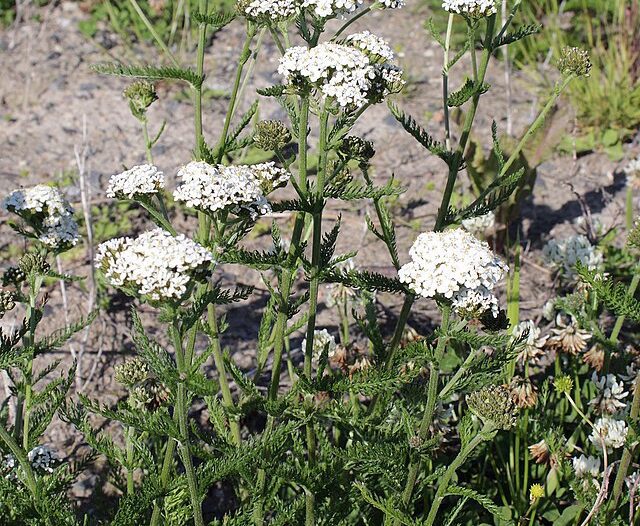
Whether added as a backdrop in your Native garden, or scattered in a prairie or savanna, Yarrow is a welcome addition that will attract pollinators, beneficial predator insects, (guardians) and bring a smile with abundant flowers and attractive fern-like foiage.
Achillea millefolium, commonly known as White Yarrow, is a hardy Michigan native perennial wildflower valued for its long bloom season, pollinator support, and adaptability to prairie, savanna, and native garden landscapes.
This native species plays an important ecological role in supporting beneficial insects, native bees, butterflies, and predatory pollinators throughout the growing season.
Botanical Profile
Scientific Name: Achillea millefolium
Common Name: White Yarrow
Plant Type: Native perennial wildflower
Native Range: Michigan and throughout much of North America
Bloom Period: Late spring through early fall
Flower Color: White (occasionally soft cream)
Height: 1–3 feet
Spread: 1–2 feet (spreads gradually by rhizomes)
Sun Requirements: Full sun
Soil Preference: Well-drained sandy, loamy, or average soils
USDA Zones: 3–9
Why Plant Native White Yarrow in Michigan?
White Yarrow is especially valuable in Michigan native gardens because it:
- Provides nectar and pollen for native bees and butterflies
- Attracts beneficial predator insects that help control garden pests
- Thrives in dry, sandy, or nutrient-poor soils
- Tolerates drought once established
- Supports biodiversity in prairie and savanna restorations
As a native species, Achillea millefolium integrates naturally into Michigan ecosystems and requires less maintenance than many ornamental cultivars.
Key Features of Michigan White Yarrow
- Tiny, tightly packed daisy-like florets form flat-topped flower clusters
- Abundant blooms create continuous color from late spring through early fall
- Finely divided leaves create a soft, fern-like texture
- Aromatic foliage deters some herbivores
- Deadheading encourages additional blooming
The plant’s upright growth habit makes it ideal for borders, meadow plantings, and pollinator corridors.
Pollinator & Ecological Benefits
Native White Yarrow supports:
- Native solitary bees
- Honeybees
- Hoverflies
- Parasitic wasps
- Lady beetles
- Butterflies
Because of its flat-topped flower structure, it provides easy landing platforms for beneficial insects. This makes it especially valuable in ecological gardening and habitat restoration projects across Michigan.
How to Propagate White Yarrow
Achillea millefolium is easy to propagate using multiple methods:
Division
Divide mature clumps in early spring or early fall when soil moisture is moderate. Replant divisions promptly to reduce transplant stress.
Cuttings
Softwood cuttings may be rooted during the growing season. Root cuttings are also viable in controlled environments.
Seed
- Sow seeds in late summer or early fall
- Cold stratification is not strictly required
- Light moisture improves germination
- Plant in full sun with well-drained soil
- Seeds can be collected in late fall
Because White Yarrow spreads by rhizomes, established plants will gradually form attractive colonies.
Reference:
Propagating Yarrow Video by SubTerra Organization
Growing Conditions & Maintenance
- Prefers full sun for best flowering
- Tolerates drought once established
- Avoid overly rich soils (can cause floppy growth)
- Deadhead to extend bloom period
- Cut back in late fall or early spring
This low-maintenance native perennial is well suited for sustainable landscaping in Michigan.
Native vs. Cultivar Considerations
You can find Yarrow at almost any plant nursery, but choosing Native Yarrow is important to achieve for ecological benefit. Do your garden a favor and choose to plant Achillea millefolium rather than ornamental hybrids.
Michigan Native White Yarrow (Achillea millefolium) produces flat-topped clusters of small white flowers that bloom from late spring through early fall. Its finely divided, fern-like foliage adds soft texture to gardens and prairie plantings. The plant spreads gradually by rhizomes and benefits from deadheading to encourage continuous blooming.
Native White Yarrow can be propagated by dividing mature clumps in early spring or fall, rooting softwood cuttings, or sowing seeds in late summer. It prefers full sun and well-drained soil. Although stratification is not required, consistent moisture improves seed germination.
Yes. Achillea millefolium is native to Michigan and much of North America. It grows naturally in prairies, open fields, roadsides, and savannas.
Yes. Native White Yarrow provides nectar and pollen for bees, butterflies, hoverflies, and other beneficial insects, making it an excellent addition to pollinator gardens and habitat restoration projects.